Guides & Articles
Mastering the Light: A Guide to Lens Categories & Tints
Discover lens categories, VLT transmission, and tint colors. Learn how to choose the perfect lens tint for your environment and lifestyle.
Read more

Guides & Articles
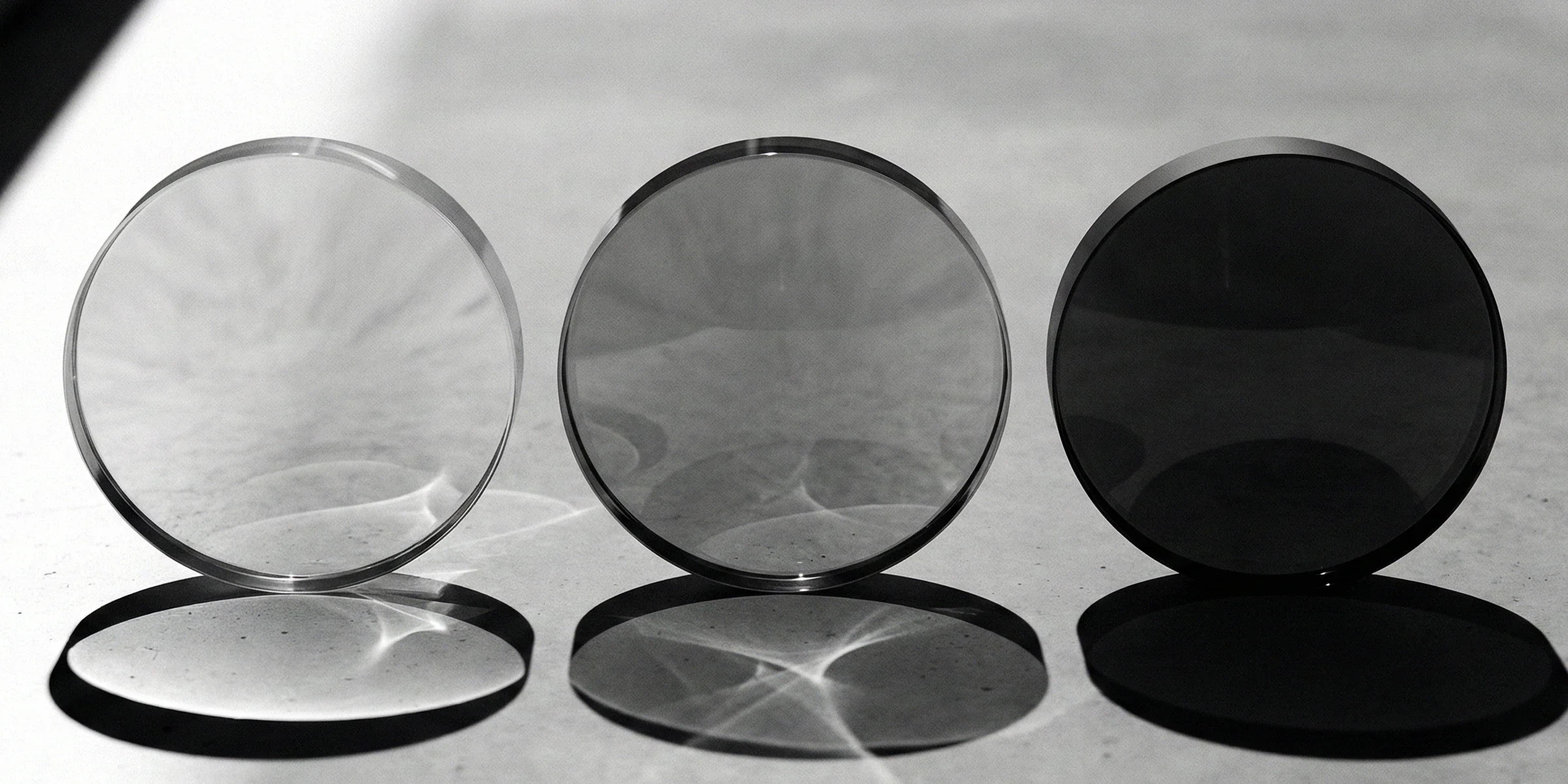
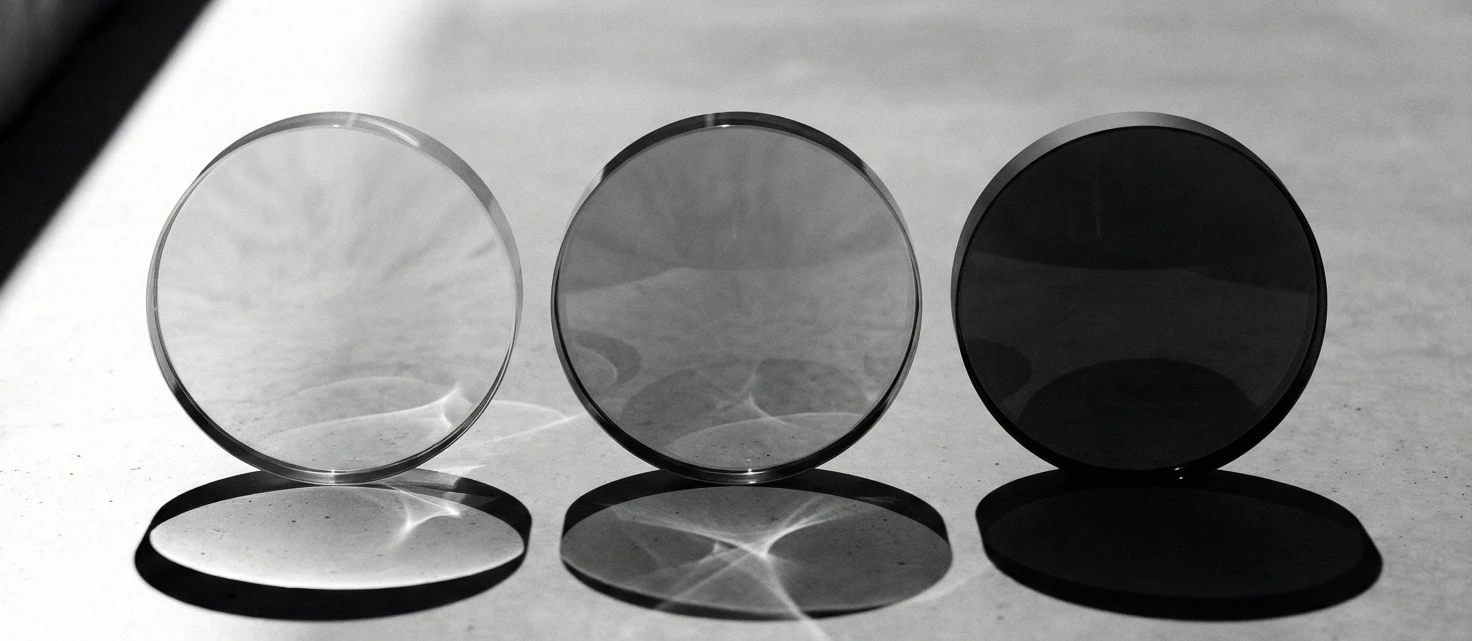
Darker lenses don't block more UV. UV protection comes from a filter in the lens material, so a light tint can block 100% of UVA and UVB while a dark one blocks none.
Many people believe that the darker a sunglass lens, the better it protects the eye. It sounds logical, and it is wrong. Switzerland's Federal Office of Public Health puts it plainly: UV protection depends on the material the lens is made of, not on its colour or tint. Darkness and UV protection are set by two different parts of the lens, and you can have either one without the other.
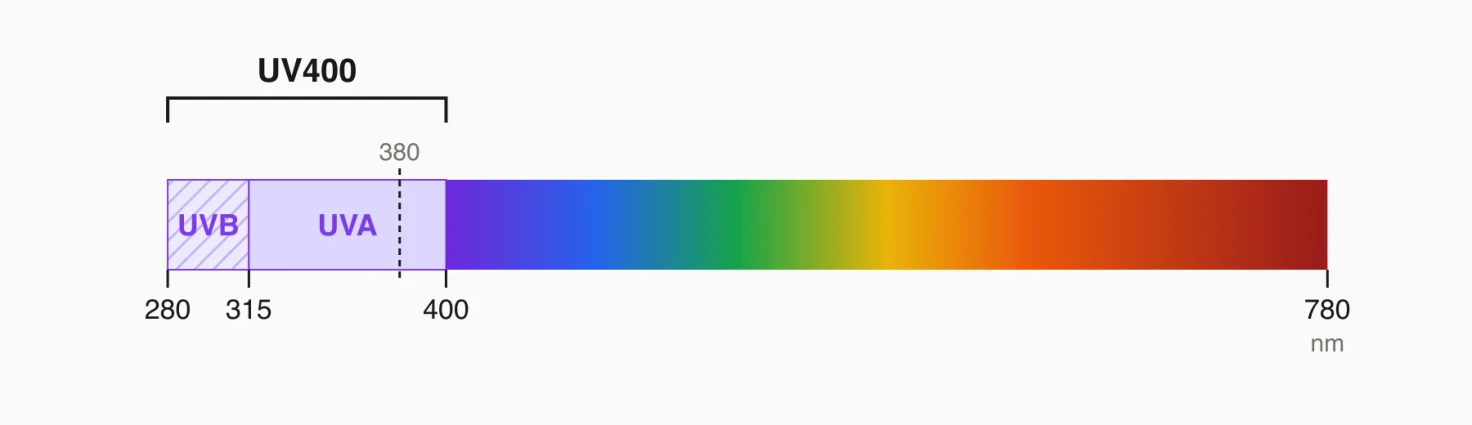
Visible light is what you see: brightness, glare, colour. It covers wavelengths from roughly 380 to 780 nanometres. Tint reduces it, and the lens category (0 to 4) tells you by how much.
Ultraviolet (UV) radiation sits just below the visible range. The World Health Organization defines UVB as 280–315 nm and UVA as 315–400 nm; the shorter UVC is absorbed by the atmosphere. About 95% of the UV that reaches the ground is UVA. You cannot see any of it, so it does not make you squint. The cornea and the lens of the eye absorb it, and over years it contributes to cataract and other lasting damage.
A UV filter is built into the lens material and is colourless. That leads to three plain facts:
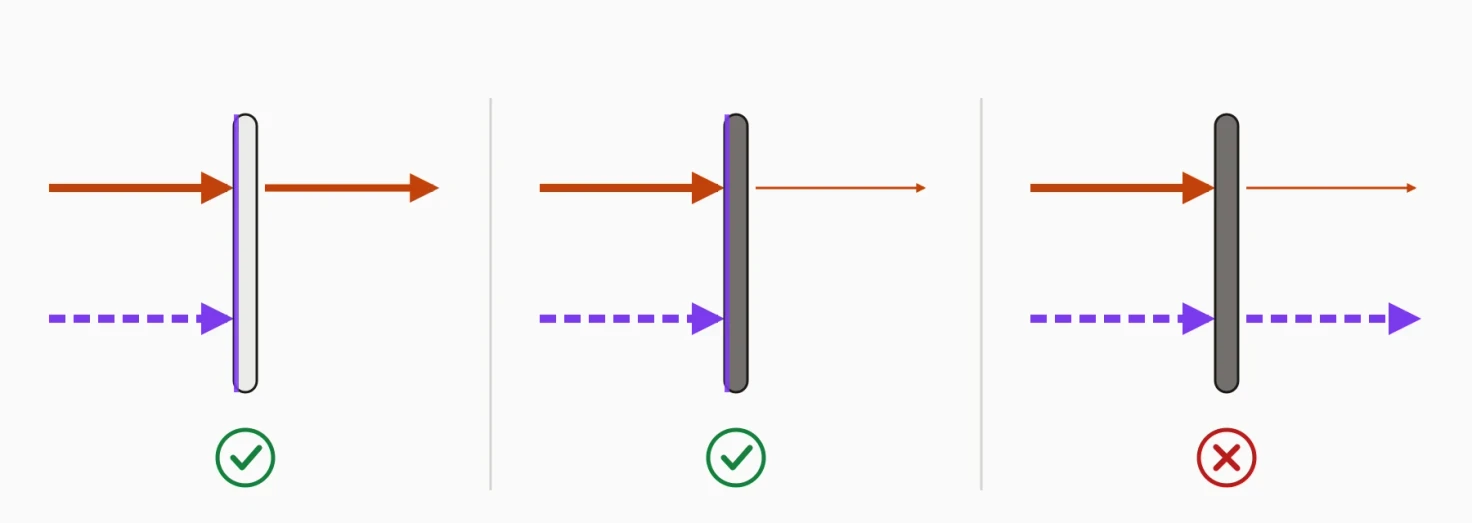
The eye has its own defence against bright light. In sunshine, the pupil narrows and you squint. Both reduce the light, including UV, that reaches the inside of the eye.
A dark lens tells the eye it is in shade. You stop squinting and the pupil widens. The same Swiss fact sheet warns that unsuitable sunglasses can even increase the UV dose the eye receives, because the pupils widen behind them. If the lens has no UV filter, nothing stops that UV.
Researchers disagree on which effect matters most. A 2024 study in Scientific Reports calculated that the pupil itself is not the main factor. The bigger change is that you stop squinting, so the eye takes in light from a wider field of view. Either way, the conclusion is the same: only wear tinted lenses that are verified to block UV.
UV protection is invisible, so the label is your only quick check. In Europe, look for the CE mark and a "UV 400" or "100% UV" label. Germany's Federal Office for Radiation Protection names the UV400 marking as the sign that a lens blocks UV completely. In a Swiss market test of 57 CE-marked sunglasses, every pair met the requirement for 100% UV protection, with no difference between cheap and expensive ones (FOPH, 2024). The label must also state the filter category and whether the glasses are suitable for driving.
The number matters. Some industry standards still define UV as ending at 380 nm, so a lens can meet them and still let the 380–400 nm band through. ZEISS notes that around 40% of the solar UV that reaches the earth falls in that band. UV400 closes the gap. If a pair has no label, an optician can measure its UV transmission.
A lens can only filter the light that passes through it. Sunlight also reaches the eye around the frame, from the sides and from above, and reflected off water, sand and snow. The 2024 study notes that frame design plays the biggest role for light coming in from the side, and the WHO recommends sunglasses with 99–100% UVA and UVB protection together with a broad-brimmed hat.
In practice: on a normal city day, a UV400 lens does most of the work. On snow, on the water or at altitude, where UV comes from every direction, add a hat with a brim.
Since UV protection comes from the lens material, not the darkness, a light lens is as safe as a dark one. The choice comes down to how much light you want to see.
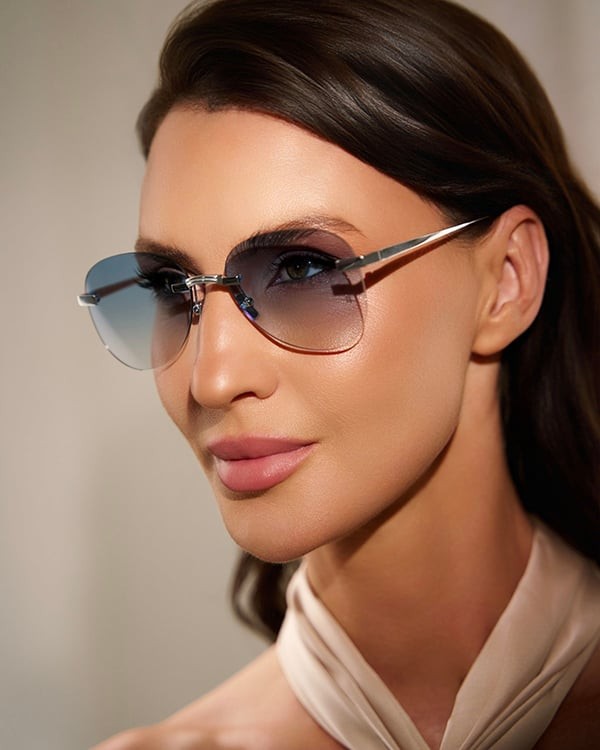
A light tint (Category 1, 43–80% light transmission) suits overcast days, northern winters and towns, where a darker lens makes shaded streets hard to read. It also keeps your eyes visible to the person you are talking to. A medium tint (Category 2, 18–43%) suits partly cloudy days and changing light. A dark tint (Category 3, 8–18%) is for bright sun, water and snow, where glare is the problem.
Archē lenses are Category 2, except the lighter Pteron Azure, Kairos Crystal and Iris Jade, which are Category 1. All of them block 100% of UVA and UVB.
For every category, the darker Category 3 and 4 options and which tint colour suits which light, see our lens categories and tints guide. One rule matters for UV: Category 4 lenses (3–8%) are too dark for driving under EN ISO 12312-1, but they protect no better against UV than Category 1.
Every Archē frame is fitted with ZEISS lenses. Since 2018, all clear ZEISS plastic lenses have offered full UV protection up to 400 nm, the same UV400 level that sunglass labels refer to. Every tint in the Archē range carries the same UV400 protection, so the tint does not change it.
The ZEISS coatings on the lens also matter for daily use. A back-surface anti-reflective coating stops light from behind you bouncing off the inside of the lens into your eye, and the DuraVision hard coating protects the surface from scratches.
Short term. A day of strong UV, especially reflected off snow, ice, water or sand, can burn the cornea. This is photokeratitis; on snow it is called snow blindness. It is often only noticed hours after the damage is done, and it usually fades within a day or two. The WHO describes it as reversible and not linked to long-term damage.
Long term. Years of exposure add up:
All of these come from UV, which you cannot see, not from the brightness that makes you reach for darker lenses.
The darkness of a lens is a comfort choice. UV protection is a separate rating that you check on the label. With a UV400 filter, a Category 1 lens protects your eyes as well as a Category 3 one, so choose the tint for your light conditions and your taste, and add a brimmed hat where UV comes from every side. Every pair of Archē sunglasses blocks 100% of UVA and UVB.
Version: 3.1 | Last Updated: 2026-10-11
Experience the engineering and optics behind our frames. Premium rimless titanium sunglasses with ZEISS lenses, crafted for absolute clarity.
Continue Reading