Eyewear Materials: A Comparative Analysis of Why Beta-Titanium Leads
Beta-titanium compared with pure titanium, acetate, stainless steel, aluminium and polyamide: weight, skin contact, ageing, adjustment and repair, checked against optician training literature and dermatology studies.
By Eleven Spectacles · · · 12 min read
Every frame material is a trade-off between weight, strength, how it sits on skin, and how it ages. This guide compares the main options with beta-titanium, the alloy we use for our rimless Archē sunglasses. The figures come from optician training articles and dermatology studies, linked where they appear, and the guide says where other materials do better.
Frame material reflects a design intent as much as a spec sheet.
Designed for replacement. Some materials are quick to mould and easy to restyle each season. That suits a fast product cycle and wearers who like to change frames often.
Designed to last. Others are chosen so that a frame can stay in service for years: kept, adjusted and cared for rather than replaced.
Titanium in eyewear comes in three forms, and they behave differently. The Association of British Dispensing Opticians (ABDO) lists them in its training article on titanium frames:
Form
What it is
How it behaves in a frame
Pure titanium
About 99.5% titanium
Strong and inert, comparatively stiff
Beta-titanium
About 75% titanium, alloyed with vanadium and/or aluminium
Springier; allows thinner temples
Clad titanium
A base metal such as Monel with a titanium outer layer
Titanium only on the surface
A continuing-education article for opticians in 20/20 magazine gives a typical beta-titanium as 75% titanium, 22% vanadium and 3% aluminium. It notes that beta-titanium is nickel-free and allows "thinner construction, more flexibility" than pure titanium. That springiness stays with the temples for the life of the frame.
Beta-titanium is not "memory metal". Frames sold as memory metal, such as Flexon, are a nickel-titanium alloy with 40–50% nickel, according to the same article. They bend further and return to shape, but they contain a large share of nickel, which matters if you are allergic to it.
The usual claim is that titanium is "the light metal". The optician literature puts numbers on it:
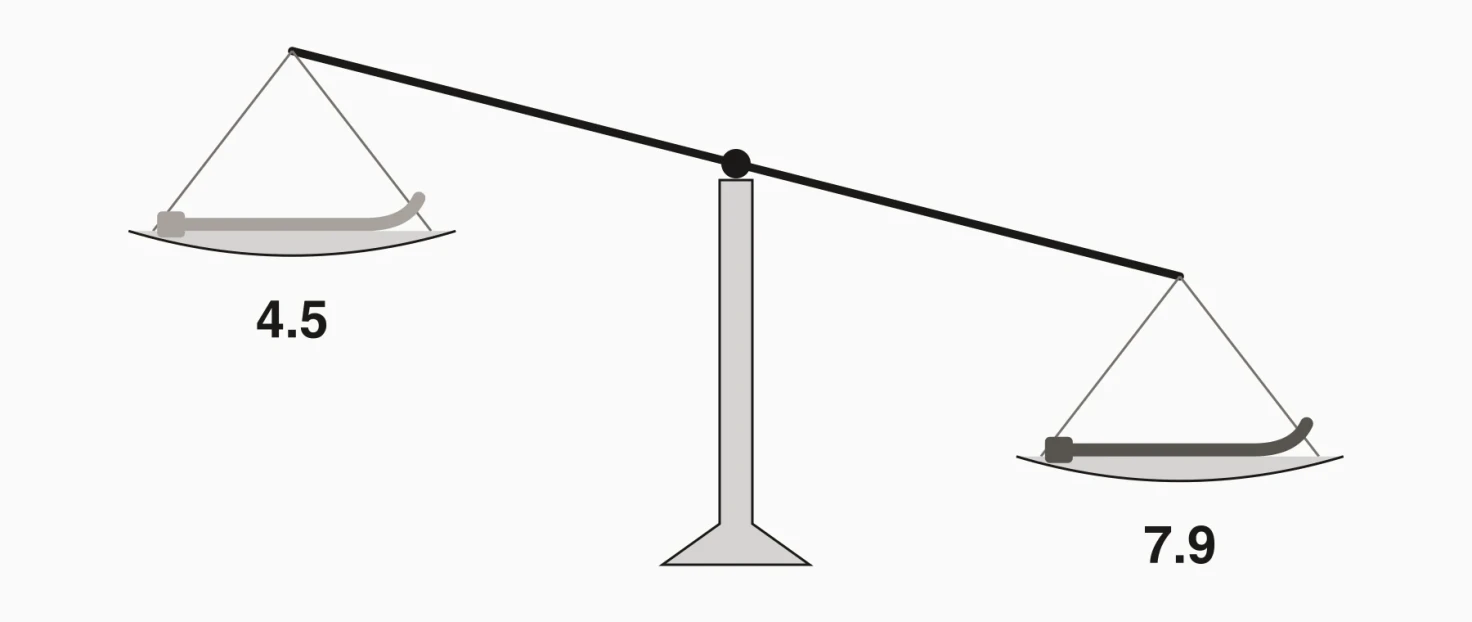
Against steel: titanium has a specific gravity of 4.5, stainless steel 7.9 (20/20). ABDO describes pure titanium as as strong as steel but about 45% lighter.
Against aluminium: titanium is about 60% heavier than aluminium, but twice as strong (both sources).
Against plastics: plastics are lighter as materials. ABDO's article on plastic frames describes TR-90 nylon as the lightest engineering plastic, and cites polyamide full-rim frames from 4.1 g.
The same temple in titanium (left, specific gravity 4.5) and stainless steel (right, 7.9). Source: 20/20 magazine.
So titanium frames are not light because titanium is the lightest material. They are light because titanium is strong enough to be used in thin wire and sheet. Our Archē frames weigh 17–18 g. For what frame weight means over a full day of wear, see our guide to lightweight sunglasses.
What it is. Acetate is made from cotton linters and wood pulp with acetic acid and a plasticiser (ABDO). It is cut from layered sheets, which is why it takes colour and pattern that metal cannot reproduce. Temples usually carry a metal core for strength.
How it ages. The same ABDO article notes that as acetate frames age, the plasticiser can dry out and make the material more brittle. Older frames need more heat to soften, so adjusting them carries more risk. The surface can lose its polish and turn chalky, especially in darker colours, though it can be re-polished.
Heat. Opticians adjust acetate by warming it to about 57 °C. Too much heat distorts it and makes it bubble.
Skin. Plasticisers and UV stabilisers are among the frame allergens reported in a dermatology review of eyeglass-frame dermatitis, alongside nickel. Reactions are uncommon, but acetate is not inert by default.
What it is. The most common metal for mid-range frames: strong and rigid.
Weight. At a specific gravity of 7.9 against titanium's 4.5, the same part in steel weighs about 75% more.
Skin. Many stainless steels contain nickel. In a study of 42 patients with dermatitis where their glasses touched the skin, 78.5% of the frames released nickel in a spot test. The skin-contact parts averaged 15.7% nickel and 20.3% chromium, and nickel was the most common allergen in patch tests (73.8% of patients). The frames had more fine scratches where they touched skin, which the authors link to the reactions. EU law limits nickel release from articles in direct and prolonged skin contact to 0.5 µg/cm² per week (Regulation (EC) No 552/2009).
Where it leads. Rigidity, where a stiff frame is wanted.
Against titanium. Aluminium wins on weight per volume: titanium is about 60% heavier. Titanium is about twice as strong, so a titanium part can be thinner for the same job, which closes most of the gap in a finished frame.
What they are. Nylon-based plastics such as Grilamid TR-90, injection moulded and common in sports eyewear.
Strengths. ABDO describes TR-90 as the lightest engineering plastic. Nylon frames resist breakage, and because they contain no plasticiser they are considered hypoallergenic.
Limits. The same resistance to breakage makes nylon frames very hard to adjust. Some are damaged by solvents, and lenses have to be fitted cold.
Where they lead. The lowest weight, and impact resistance for sport.
Nickel is the most common contact allergen. A meta-analysis of 28 studies put nickel allergy at 11.4% of the general population. A clinical review gives 8–19% of European adults, with a strong female predominance.
Titanium and beta-titanium contain no nickel. Titanium is not completely inert: research on titanium implants finds that it does release small amounts of titanium into surrounding tissue, with little sign of toxicity.
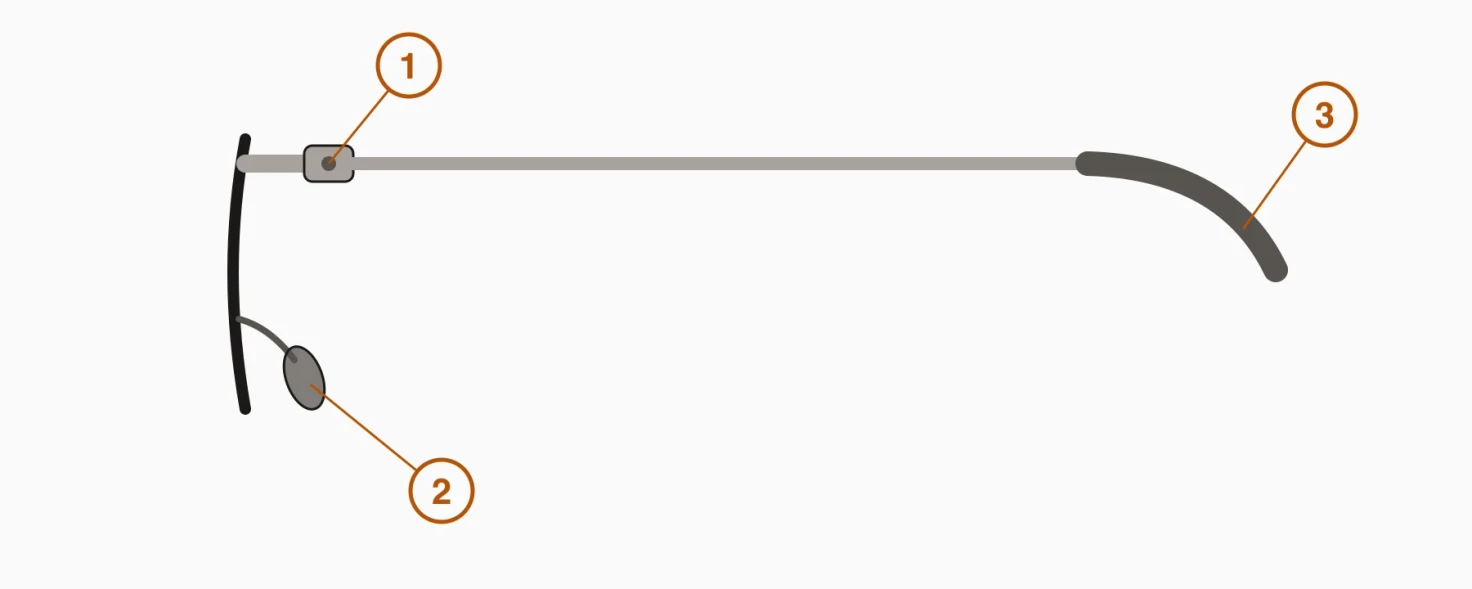
The bigger risk with a titanium frame is the parts that are not titanium. ABDO notes that screws are almost never titanium, and that temple cores and the metal cores of nose pads may be other metals. The Titanium-100 mark described in 20/20 requires 90–100% titanium by weight but excludes hinge screws, nose pads, temple tips and washers. A dermatology review also records reactions to titanium frames containing palladium.
The parts of a titanium frame most often made of something else: 1 hinge screws, 2 nose-pad arms and pads, 3 temple tips. Source: ABDO, 20/20 magazine.
If you have a nickel allergy, ask what these parts are made of, not only the front and temples.
Corrosion on a metal frame usually comes from the acidity of the wearer's sweat, not the amount, according to ABDO. On nickel and copper alloys it shows as a green salt.
Titanium forms a thin, ceramic-like oxide film. If the metal is scratched, the film re-forms as long as oxygen reaches it. Research on titanium measured the film rebuilding in about 30 milliseconds (Hanawa, 2022). 20/20 describes titanium frames as 20 times more corrosion-resistant than Monel or nickel-silver.
Plastics age differently. Acetate loses plasticiser and grows more brittle, as above.
These are two different questions, and titanium answers them differently.
Adjusting the fit. Titanium frames can be flexed and formed for fit, says 20/20, but a hasty bend can snap the metal at the bend. Opticians make small, crimp-like adjustments, and use a frame warmer for the temple ends. Acetate is adjusted with heat. Nylon resists adjustment altogether.
Repairing a break. Titanium is hard to repair. It has to be laser welded or brazed in an argon atmosphere, and ABDO notes that many makers simply exchange a broken frame. Our 2-year limited warranty covers manufacturing defects in the frame and lenses.
Titanium is not the right answer for everyone. If you want bold colour and sculptural shape, or like changing frames often, acetate is a better fit. For the lowest weight in a sports frame, look at polyamide. Beta-titanium suits one frame, fitted to you and worn for years.
Choose beta-titanium if you: wear a frame daily for years, have sensitive skin or a nickel allergy, want thin temples with some spring in them, and want a frame an optician can fine-tune.
Consider acetate or polyamide if you: want the widest colour and pattern range, prefer to change frames often, or need sports eyewear specifically.
We build the Archē collection in beta-titanium because it fits how we expect the frames to be worn: fitted once, kept for years, and cared for rather than replaced.
Pure titanium frames are about 99.5% titanium. Beta-titanium is an alloy of about 75% titanium with vanadium and aluminium, which makes it springier, so temples can be thinner and spring back when flexed. Both are nickel-free. "Memory metal" frames are a different material: a nickel-titanium alloy with 40–50% nickel.
Not as a material. Titanium has a specific gravity of 4.5, and plastics are lighter than that; TR-90 nylon is described in optician training as the lightest engineering plastic. Titanium frames are light because the metal is strong enough to be used in very thin parts. A thin titanium frame can weigh less than a thick acetate one, but a polyamide frame can weigh less than both.
Titanium is about as strong as steel and about 45% lighter (specific gravity 4.5 against 7.9). It contains no nickel, while many stainless steels do; nickel is the most common contact allergen, affecting about 11% of the general population. Steel is more rigid, which some wearers prefer.
Acetate offers colour and pattern that metal cannot. It is a plasticised material: as it ages the plasticiser dries out and it becomes more brittle, and the surface can turn chalky. Beta-titanium keeps its springiness for the life of the frame and has an oxide film that re-forms if scratched. Acetate is adjusted with heat; titanium is bent cold, in small steps.
The titanium itself is nickel-free, but a frame sold as titanium can have screws, nose-pad arms or temple cores made of other metals, and some "titanium" frames have been found to contain palladium. If you have a nickel allergy, ask what those parts are made of, not only the front and temples.
Sometimes, but not easily. Titanium has to be laser welded or brazed in an oxygen-free (argon) atmosphere, so many makers exchange a broken frame instead of repairing it. Adjusting the fit is a different matter: titanium bends cold for adjustments, as long as it is done in small steps.
Aluminium is lighter than titanium, but titanium is about twice as strong, so a titanium part can be made thinner for the same job. We chose beta-titanium for that strength, for its springiness at the temples and because it is nickel-free.
References
Abbott J. "The rise of the Titans." Dispensing Optics (ABDO), August 2014, pp. 4–8. abdo.org.uk
Mattison-Shupnick M. "Titanium Eyewear, More Than A Material's Reputation." 20/20 continuing education, November 2015. 2020mag.com
Abbott J. "Plastic fantastic." Dispensing Optics (ABDO), January 2015, pp. 22–25. abdo.org.uk
Kim IS, Yoo KH, Kim MN, et al. "The fine scratches of the spectacle frames and the allergic contact dermatitis." Annals of Dermatology, 2013;25(2):152–155. pmc.ncbi.nlm.nih.gov
Šitum M, Lugović-Mihić L, Bulat V, et al. "Dermatological aspects of contact dermatitis from eyeglass frames and optical materials." Collegium Antropologicum, 2013;37 Suppl 1:19–24. pubmed.ncbi.nlm.nih.gov
Alinaghi F, Bennike NH, Egeberg A, Thyssen JP, Johansen JD. "Prevalence of contact allergy in the general population: A systematic review and meta-analysis." Contact Dermatitis, 2019;80(2):77–85. pubmed.ncbi.nlm.nih.gov
Ahlström MG, Thyssen JP, Wennervaldt M, Menné T, Johansen JD. "Nickel allergy and allergic contact dermatitis: A clinical review of immunology, epidemiology, exposure, and treatment." Contact Dermatitis, 2019;81(4):227–241. pubmed.ncbi.nlm.nih.gov
Hanawa T. "Biocompatibility of titanium from the viewpoint of its surface." Science and Technology of Advanced Materials, 2022;23(1):457–472. pmc.ncbi.nlm.nih.gov
Beta-Titanium Eyewear: The Architecture of Weightlessness
What beta-titanium is, why its crystal structure makes it springier than pure titanium, and what that means for a frame you wear every day – checked against optician training articles and materials research.
Read more
Guides & Articles
Lightweight Sunglasses: What Frame Weight Actually Means
How much sunglasses weigh, what sets the number, and why the size of the nose pads matters as much as the grams – with the figures optician sources actually give.
Read more
Guides & Articles
Mastering the Light: A Guide to Lens Categories & Tints
Discover lens categories, VLT transmission, and tint colors. Learn how to choose the perfect lens tint for your environment and lifestyle.


 The same temple in titanium (left, specific gravity 4.5) and stainless steel (right, 7.9). Source: 20/20 magazine.
 The parts of a titanium frame most often made of something else: 1 hinge screws, 2 nose-pad arms and pads, 3 temple tips. Source: ABDO, 20/20 magazine.